







HOMEOPATHY TREATMENT FOR URINARY TRACT INFECTION
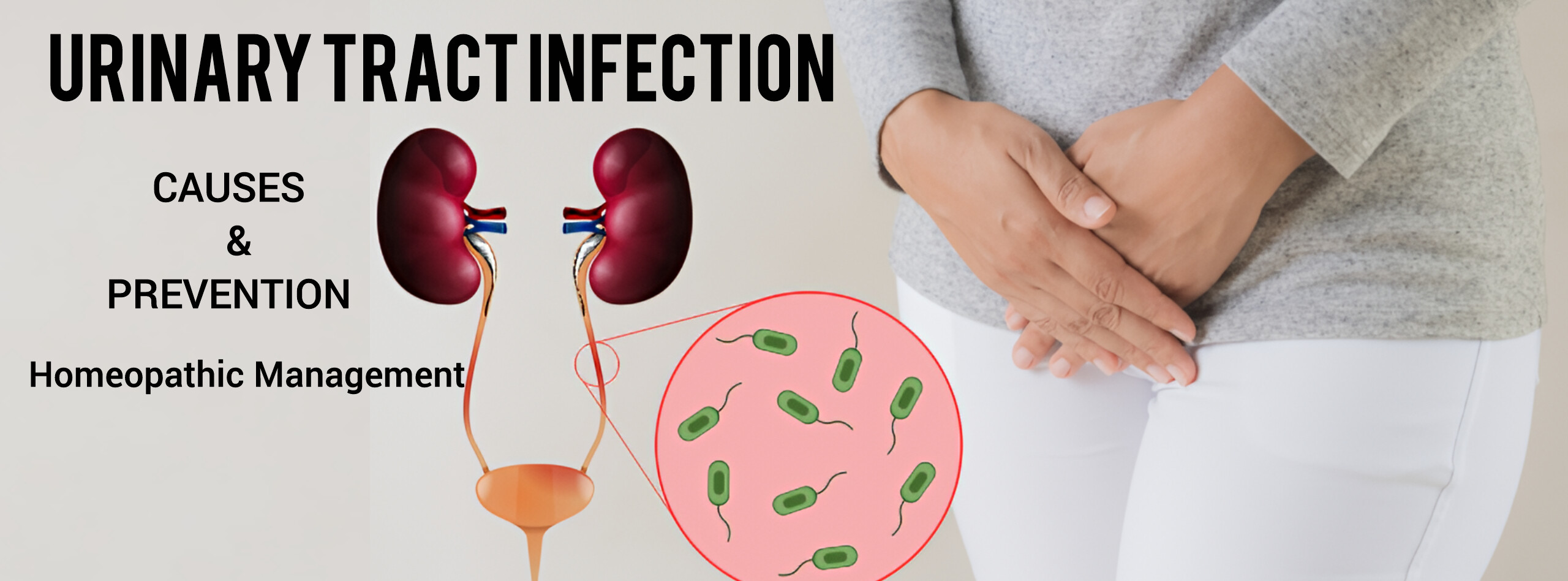
A Urinary Tract Infection (UTI) is a common bacterial infection that occurs when microorganisms—most often bacteria—enter the urinary system and begin to multiply. The urinary tract consists of the kidneys, ureters, bladder, and urethra, all of which play roles in producing, storing, and eliminating urine.
RISK FACTORS :
- Poor personal hygiene
- Holding urine for long periods
- Dehydration
- Urinary catheterization
- Pregnancy
- Diabetes mellitus
- Menopause (due to reduced estrogen levels)
Anatomical abnormalities of the urinary tract
CAUSES :
UTIs are typically caused by bacteria, most commonly Escherichia coli (E. coli).
Bacterial Infection: The most common cause is Escherichia coli (E. coli), a bacterium usually found in the intestines.
Other Pathogens: Klebsiella, Proteus, Enterococcus, and Staphylococcus saprophyticus may also cause UTIs.
SYMPTOMS :
- Burning or pain during urination (dysuria)
- Frequent urge to urinate, often with little urine output
- Cloudy, dark, or foul-smelling urine
- Lower abdominal pain or pelvic pressure
- Blood in urine (hematuria)
In upper UTIs (pyelonephritis): fever, chills, back pain, nausea, and vomiting
DIAGNOSIS :
Diagnosis of a UTI typically involves a medical history, physical examination, and urinalysis to detect the presence of bacteria, white blood cells, or red blood cells in the urine.
Urine analysis: Detects white blood cells, bacteria, or blood in urine.
Urine culture: Identifies the specific bacteria causing infection and tests antibiotic sensitivity.
Ultrasound or imaging: Used in recurrent or complicated UTIs to detect structural issues.
TREATMENT :
Treatment for UTIs usually involves antibiotics to kill the bacteria causing the infection.
Antibiotic therapy: Based on the bacterial cause and sensitivity test results.
Hydration: Drinking plenty of water helps flush out bacteria.
Pain relief: Mild analgesics or urinary alkalinizers may be prescribed.
Addressing underlying factors: Managing diabetes, avoiding irritants, or correcting anatomical defects.
PREVENTION :
To reduce the risk of UTIs, individuals can take steps such as :
- Maintain good personal hygiene
- Drink adequate fluids daily
- Urinate after sexual intercourse
- Avoid holding urine for long periods
- Wipe from front to back (especially for females)
Avoid excessive use of perfumed products in the genital area
HOMEOPATHIC MANAGEMENT IN UTI :
Homoeopathic medicines are personalized for the person suffering with UTI based on the individual totality of symptoms.Homeopathy offers a gentle, holistic, and effective approach to treating Urinary Tract Infections (UTIs) by addressing both the infection and the individual’s susceptibility to recurrent attacks. The remedies are chosen based on individual symptoms, constitution, and causative factors rather than just the diagnosis.Homeopathic medicines treat the individual but not the disease.Thus these medicines help in improving in kidney functioning and reduces the frequent attacks of UTIs. These medicines are safe and effective and have no side effects.
Principles of Homeopathic Treatment
Individualization: Each patient is prescribed a remedy that matches their unique symptoms and emotional state.
Root Cause Approach: Homeopathy strengthens the immune system and improves urinary health to prevent recurrences.
Non-toxic and Natural: Remedies are safe, with no side effects, suitable for all age groups, including children and pregnant women (under professional supervision).
For more details about the treatments and services offered by Unicare Homeopathy Call Us @ 9059051906.